
Photoperiodism in horses coat growth, explained through Trey’s season of recovery, regulation, and the biology of rhythm.

If you came here curious about photoperiodism in horses coat growth, I want to begin with the lived reality first. This is part of our continuing Trey’s Story series. If you are just joining, you can start at the beginning.
By this point, the acute crisis was behind us. The phones were not ringing. The smoke had cleared. The question was what healing actually looks like after emergency stops running the room. What I learned is that integration is rarely dramatic. It is subtle, rhythmic, and earned.
After the fire threat passed, I settled Trey and Divine at the permanent sanctuary I established at my home in Reno. I am not romantic about sanctuary work, but I know what instability does to a nervous system, and they had lived enough instability for a lifetime. The consistent rhythm of the high desert valley changed everything.
The healing was not dramatic. Trey’s body kept catching up to his age, his eyes softened, and his movements had more ease. Divine’s vigilance remained, but her system began to release the constant edge. They still moved like a unit, but the closeness started to look less like bracing and more like belonging. I watched the unglamorous markers of regulation: horses dozing with a hind leg cocked, soft chewing, and long, quiet breaths. These were the signs that a body believed it could be in the world again.
While Trey and Divine were deepening their recovery, another horse’s story taught me about the complex nature of care. Silver, a huge warmblood, carried his history like armor, answering pressure with aggression. I worked to find what helped him settle, not what made him submit.
Sometimes that involved simple presence; other times, we tried energy work, always with the agreement that he could choose to accept or refuse the touch. His breathing would change, the tension in his neck and shoulders softening in short windows as he tested whether he could tolerate calm without danger following. That is what I mean by energetic integration: a bridge of information the nervous system can receive alongside good food and stable relationships.
At first glance, photoperiodism in horses coat growth sounds technical, but it reveals something deeply elegant about resilience.
Photoperiodism is the biological response to changing day length. As autumn days shorten, the changing light signal influences melatonin secretion and subsequent hormonal patterns that regulate hair follicle activity and seasonal coat change. The horse’s body is not merely reacting to cold; it is anticipating the season.1,2
This biological anticipation is a powerful metaphor for regulation. Healing did not come because I found one perfect technique; it came because life became rhythmic enough for a frightened body to start predicting safety. Morning looked like morning. Rest followed effort. Quiet followed alertness. That is part of what regulation is: a trustworthy rhythm.1

Seasonal regulation is not only about coat length; it is about thermoregulation, the whole-body process of maintaining internal temperature.
The winter coat provides insulation, which horses can enhance through piloerection (raising the hairs) to trap more air near the skin. They also adjust blood flow and use steady forage intake to generate internal heat. Cold and danger are not the same thing. A healthy horse with dry ground and adequate forage can handle winter, but wetness, wind, poor nutrition, or illness can shift that equation quickly.
Silver’s story, which ended with a catastrophic injury and the necessary, humane decision to let him go, became a point of contrast. On the same land, with the same care, life does not give everyone the same outcome. Trey and Divine were moving deeper into health.
Silver met an ending that was not about effort or deserving. His story holds the same lesson: healing is real, and it is not always the same as survival. Sometimes, the most honest form of care is to stay present, choose what is humane, and let dignity be the final offering.
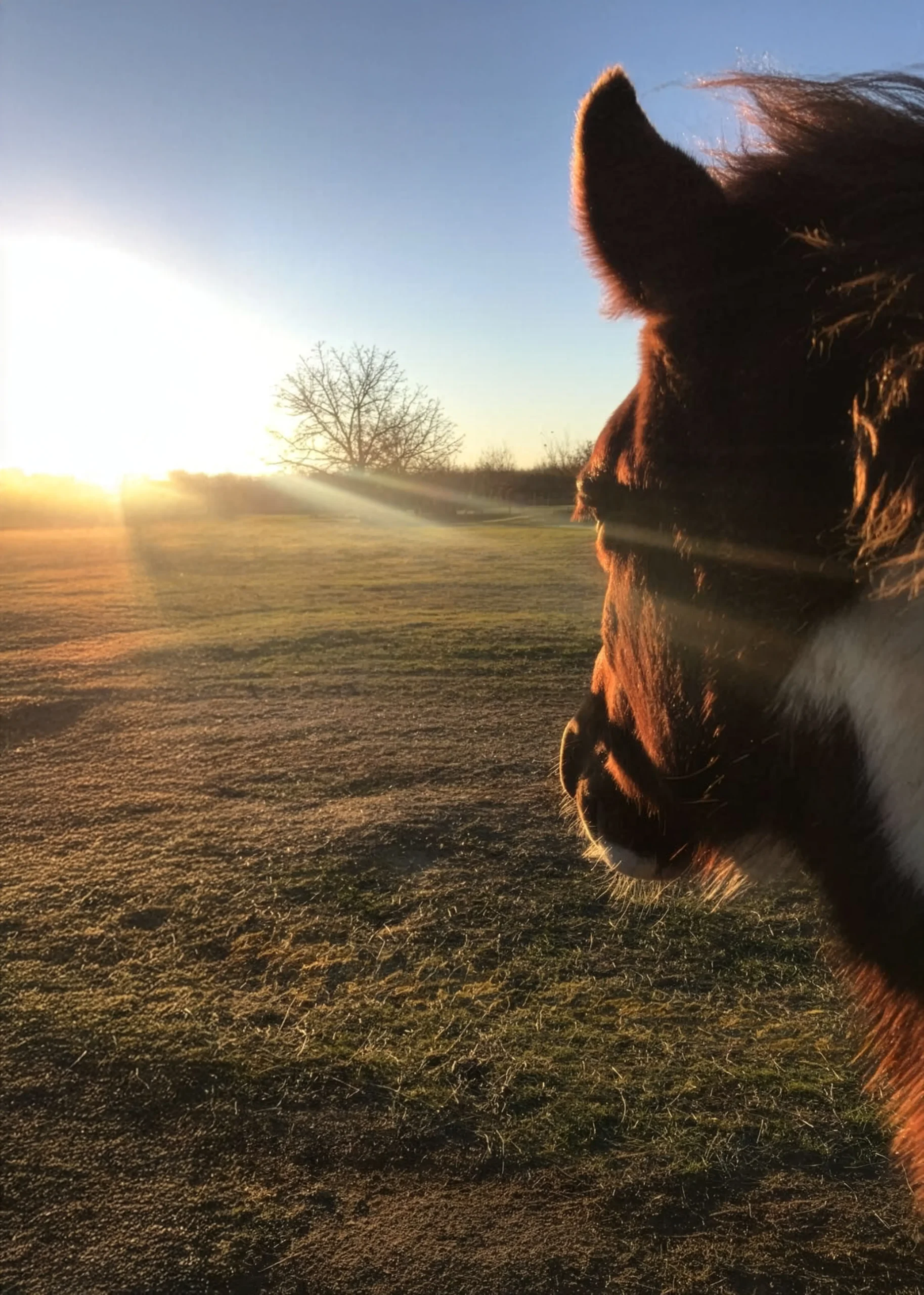
When I think about that season now, I think about the quiet mornings in Reno, the way Trey and Divine would graze side by side without bracing, and the way Trey would sometimes look across the pasture like he was remembering something older than fear.
If you want a grounded, shareable place to keep learning, explore the teacher resources.
If you want to go deeper into that side of the story, learn about the science of wildness. That is where we keep building the steadier, more grounded version of this conversation.
That is the version of resilience I trust most now. Not the kind that performs strength. The kind that returns to rhythm.
Previous Post: Wild Horses and Wildfire Mitigation: What Works
Next Post: Seed Dispersal by Horses: What Trey Leaves Us With


Join our wild horse book for kids, Trey’s Story, launch updates and get the free Ten Facts About Wild Horses, perfect for classrooms and curious minds.

The American Wild Horse Foundation is a 501(c)3) charitable organization.
EIN: 47-4925050 • Mailing Address: 2620 Del Monte Lane, Reno, NV 89511
This site is protected by reCAPTCHA and the Google Privacy Policy and Terms of Service apply.